Child Health and Safety Guide
One thing children have in common – germs. But there are things you can do to try and keep them from getting sick.
Preventing Childhood Illnesses
- Keep them away from anyone who is sick or feeling unwell.
- Wash your hands often.
- Ask people to wash their hands before holding or playing with your child.
- Keep them away from smokey environments and secondhand smoke.
- Disinfect things that are used a lot. Start with countertops, doorknobs and toys.

After Hours Care
You can’t schedule sick. Be prepared and know your options for getting care when you need it.
24/7 Nurse Advice Line
If your child’s provider has an after-hours line that is a good place to start. Talk to a nurse 24/7 with your health plan's nurse advice line at no cost. Find the number on your member ID card. The nurse will listen to your concerns and help you decide what to do next.
Virtual Care
You have access to virtual care providers as part of your benefits. Create an account and video chat with a provider day or night. Visit your health plan website or call member services to learn more.
What Is an Urgent Care Center?
It’s exactly what it says- access to care for an urgent health need. An urgent care center can help check and treat illnesses and injuries that need attention but aren’t life-threatening. When your child is sick and your provider isn’t available and you want them to be seen in person, this is a good option. These centers can run tests and prescribe certain medications.
They usually offer longer office hours and shorter wait times than an emergency room. But not all urgent care centers see young children. Double check before you go.
Ear Infections
Ear infections are very common in young children, especially between 6 months and 2 years old. Some occur after a cold. Others can be caused by other risk factors below. If you think your child may have an ear infection, make an appointment with their provider to have their ears checked.
What causes an earache or ear infection?
Ear infections can happen after your child has a cold or virus. Fluid builds up behind the eardrum and can get infected. This can cause pain, fever, or trouble hearing. There are also risk factors that can cause an earache. Things like allergies, a clogged ear tube, swimming, and being around smoke.
What can you do at home?
Babies can’t tell you when their ear hurts. Watch for signs like fussiness, pulling on their ear, or not eating as much as normal. Younger children may tell you their ear hurts. Or that they are having a tough time hearing. If you think your child may have an ear infection, you can try some comfort measures at home:
- Check with your child's provider what medicine you can give them to help.
- Put a warm or cool compress or towel on their ear.
- Comforting them can help them calm down. Sing their favorite songs or just hold them.
When should you get help, fast?
If your child looks very sick, has a high fever, or does not find relief with comfort measures at home, seek care right away.
- Call your child’s provider or their after-hours line.
- Call your health plan 24-hour nurse advice line at the number on your member ID card.
- Go to a nearby pediatric urgent care center.
Fever
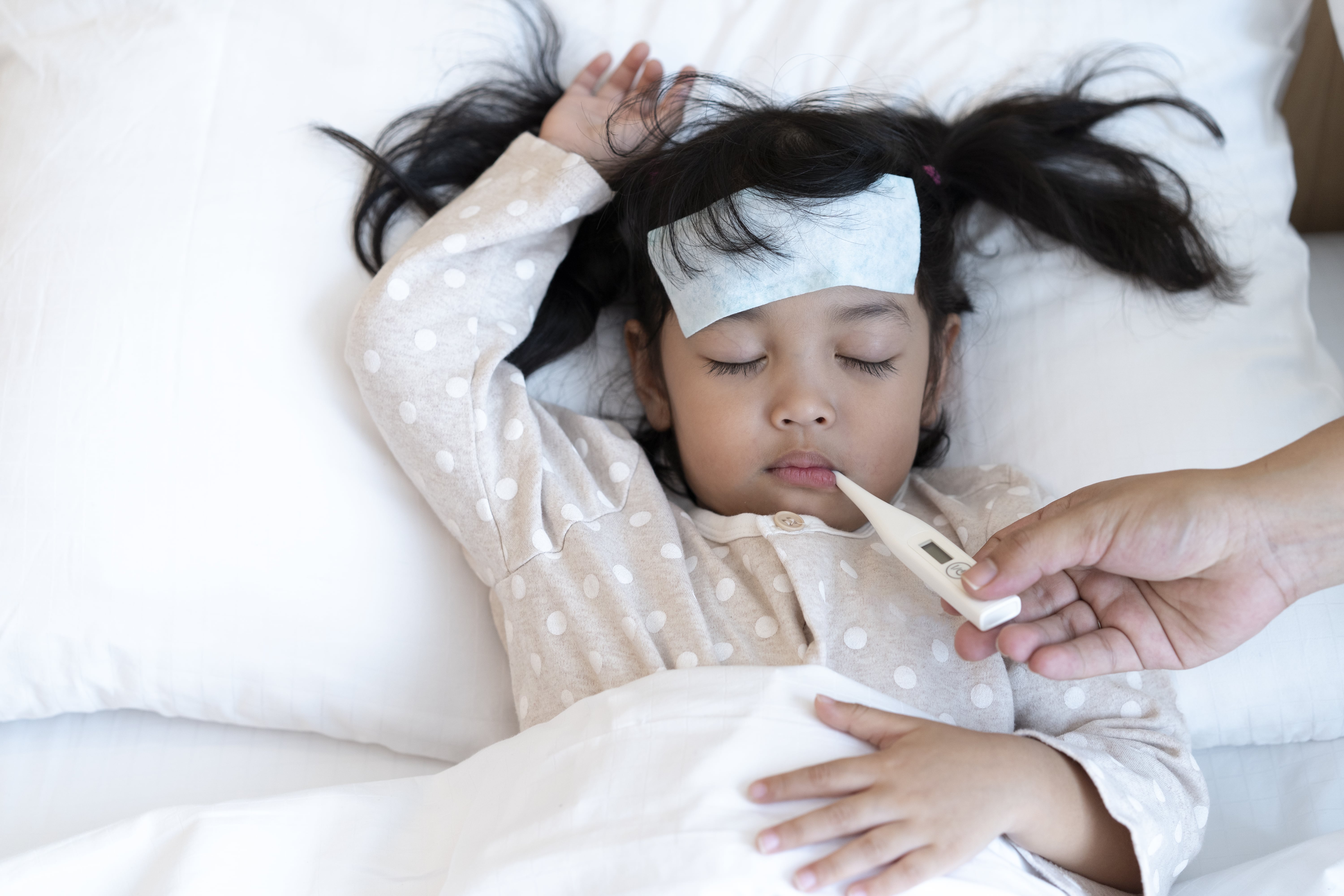
Sometimes children get fevers, which means their body is fighting germs. A fever is a temperature over 100.4°F. Keep an eye on any fever and take their temperature a lot. Tell your child’s provider if your child has a fever at any age.
Call your child’s provider or your nurse advice line right away if your child:
- Seems very tired.
- Doesn’t want to eat or drink.
- Cries a lot and can’t calm down.
- Shows signs of being dehydrated, like no tears when crying or a dry mouth.
- Has a fever and a rash together.
- Vomits or has diarrhea.
- Has a fever that lasts more than 1-2 days.
Always ask your child’s provider what medicine you can give them to help.
Taking your child’s temperature
- If your baby is younger than 3 months old, you will need to take a rectal temperature with a digital thermometer.
- If your baby is older than 3 months old, you can take an underarm or forehead temperature.
Learn more about how to take an accurate temperature.
Colds and Other Illnesses
Colds and respiratory infections
Babies and kids get colds just like grown-ups do. Usually, they go away on their own. But sometimes, it can develop into more serious problems like pneumonia, croup, or bronchiolitis.
If your child has a cold, give them plenty of liquids. They might have trouble eating if their nose is stuffy. Try using a bulb syringe to clear their nose if they don’t blow it on their own yet. If your child is having trouble breathing go to the emergency room or call 911 right away.
Some symptoms to look for:
- Runny or stuffy nose
- Cough and sore throat
- Fever
- Wheezing as they breathe
- Not eating much
- Overly tired
When to seek care:
- If your child has a fever. A fever is a temperature over 100.4°F.
- Any changies in breathing.
- Decrease in urine or wet diapers, dry mouth, or no tears. This could be a sign of dehydration.
- If your child has a fever and has other symptoms of being sick.
- Change in how active they are.
- If you’re worried, trust your instincts. Call your child’s provider and seek care.
Vomiting and diarrhea
Sometimes children vomit or have diarrhea. These symptoms are common when they have a stomach bug. Usually, vomiting stops in less than 48 hours. Diarrhea can last up to 2 weeks before your baby’s poop goes back to normal.
Most experts say you should keep breastfeeding your baby even if they are vomiting or have diarrhea. It might help to give your baby a little less breast milk or formula than usual. Dehydration (when your body doesn’t have enough water) is serious in babies. Watch for these signs:
- Crying with no tears.
- Dry or sticky mouth.
- No urine or no diaper change for more than 6 hours.
For infants and children of any age you should call their provider or nurse line if you notice any of the following:
- Vomiting for more than 24 hours.
- Vomit with blood or a greenish-yellow color.
- Blood or mucus in poop.
- Swollen belly or severe pain.
- No urine for more than 6-8 hours.
- Low energy and sluggish.
Secondhand Smoke
It’s important to keep your home free of smoke for your family’s health. Even if you or a family member don't smoke near children, the chemicals can still be harmful. Breathing in someone else's smoke can be very bad for you, even if you're not the one smoking. For children, it's even worse. No amount of secondhand smoke is safe.
The risks are serious:
- Breathing is harder, and your child might start to wheeze or cough.
- It can cause heart or lung problems.
- Smoke can cause asthma or make it worse.
- Babies are more likely to get sick with pneumonia or ear infections.
- Smoke can even cause sudden infant death syndrome (SIDS).
Follow these tips to protect your child:
- Don’t let anyone smoke in your house.
- Ask smokers to change into clean clothes and wash their hands when around your child.
- Don’t let anyone smoke in your car.
The very best thing you can do is make a plan to quit smoking. If you need help quitting, call your health plan member services number. They can help you find a program that’s right for you.
Source: CDC
Firearm Safety
Firearm-related injuries and deaths can be prevented. Every day, children are harmed by firearms, often due to curiosity. Hiding a firearm isn’t enough. Take precautions to keep children safe.
- Keep firearms/guns out of the home. It’s the safest option.
- If you have a gun, store it unloaded in a locked box.
- Keep ammo in a separate locked box.
- Ask about guns before playdates. If it’s not safe, offer to go to your home instead.
Source: American Academy of Pediatrics
Dental Health
Keeping children’s teeth clean and healthy contributes to their overall health. Brushing should start as soon as teeth start coming in. It’s never too early to form good habits. Some other tips to start out right with healthy teeth:
- Set the expectation of brushing once in the morning and once before bed. This will help set the routine and keep them brushing regularly.
- Show kids how to get every tooth. Brush with them and make it fun. Try brushing for the length of a favorite song. Brush at least two minutes, two times per day.
- The American Academy of Pediatrics recommends the first dental visit when the first tooth appears and by their first birthday. Build up on your child’s teeth can cause decay. Keeping up with dental appointments can help to make sure your child is on track for a lifetime of healthy smiles.
- Add some tooth-strengthening super foods to your child’s diet. Items like milk and carrots are good for healthy teeth. Acidic and sugary foods reduce the strength of enamel. Stick with sugar free drinks to help lower the risk of tooth decay.
- Learn more about teething in infants.